Board
20 × 20 · AIO 25.5 × 25.5
Both fit. But the USB port has to face down rather than sideways, or you cannot reach it once the quad is together. Add a capacitor too; a small 330 µF / 25 V is plenty.
Designed in Czechia
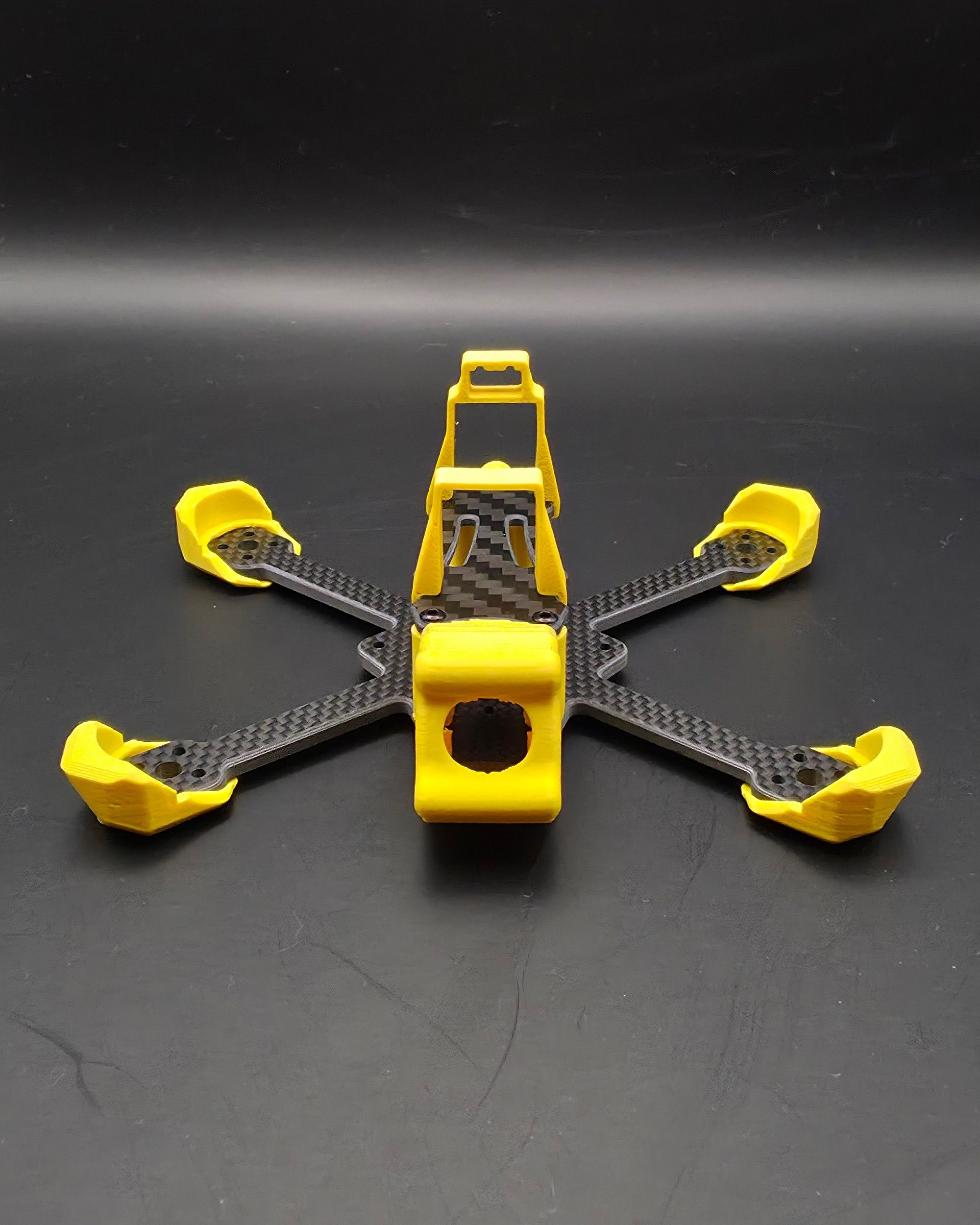
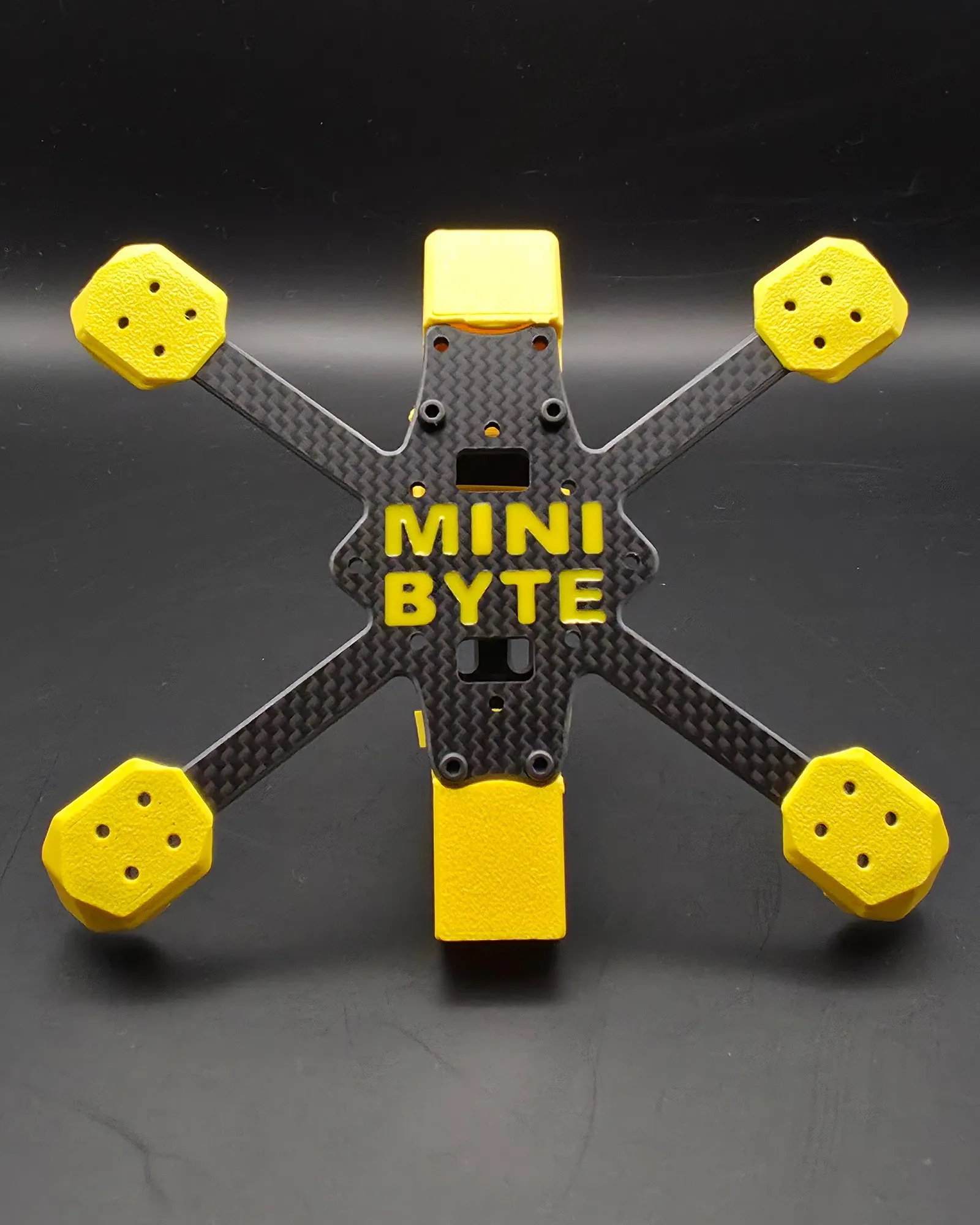
A 2.5" freestyle frame cut from T700 carbon — chamfered edges, 3 mm bottom plate, 2 mm top. The bare frame weighs 24 g; my standard build comes in at 108 g.
I'm Václav Fischer; I fly and film as SkylineDrones. Minibyte is the frame I drew because you couldn't buy a Kayoumini — and this is where I sell it.
// 01 · Origin
The Kayoumini has been unavailable for a long time. If you could still buy one, I'd never have drawn anything — but you can't, so I borrowed a friend's frame, measured the hole patterns and made my own design. I'm not hiding where it comes from; there isn't much left to invent about a 2.5" frame. I kept the basic geometry and layout and changed what I'd been missing: the arms are half a millimetre wider, sit at roughly a 3° tighter angle and are a millimetre shorter — that opens up room between the front props for the wider Flywoo camera with the wide lens, without making the frame any longer. Two extra holes at the front take the camera cage, and the top plate is reworked for a battery strap as well as TPU mounts. The screw and standoff spacing is unchanged, though, so Kayoumini prints fit the Minibyte — nothing you already own goes to waste.
“Some people call it a copy. What isn't a copy these days? And what is there left to invent about a 2.5" frame? If you could buy a Kayoumini, it would never have crossed my mind to draw my own.”
// 02 · Construction
Hover an item to highlight its layer.
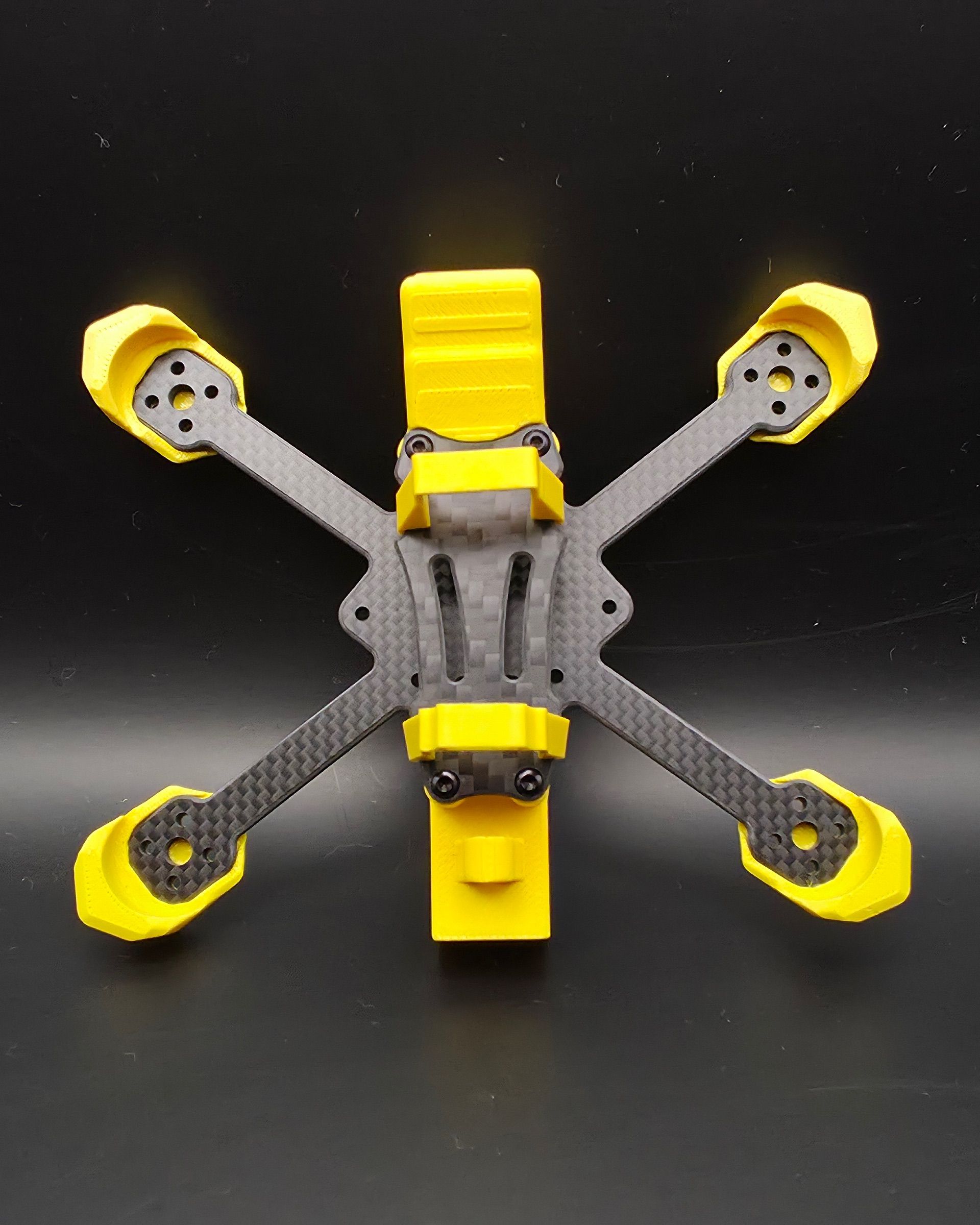
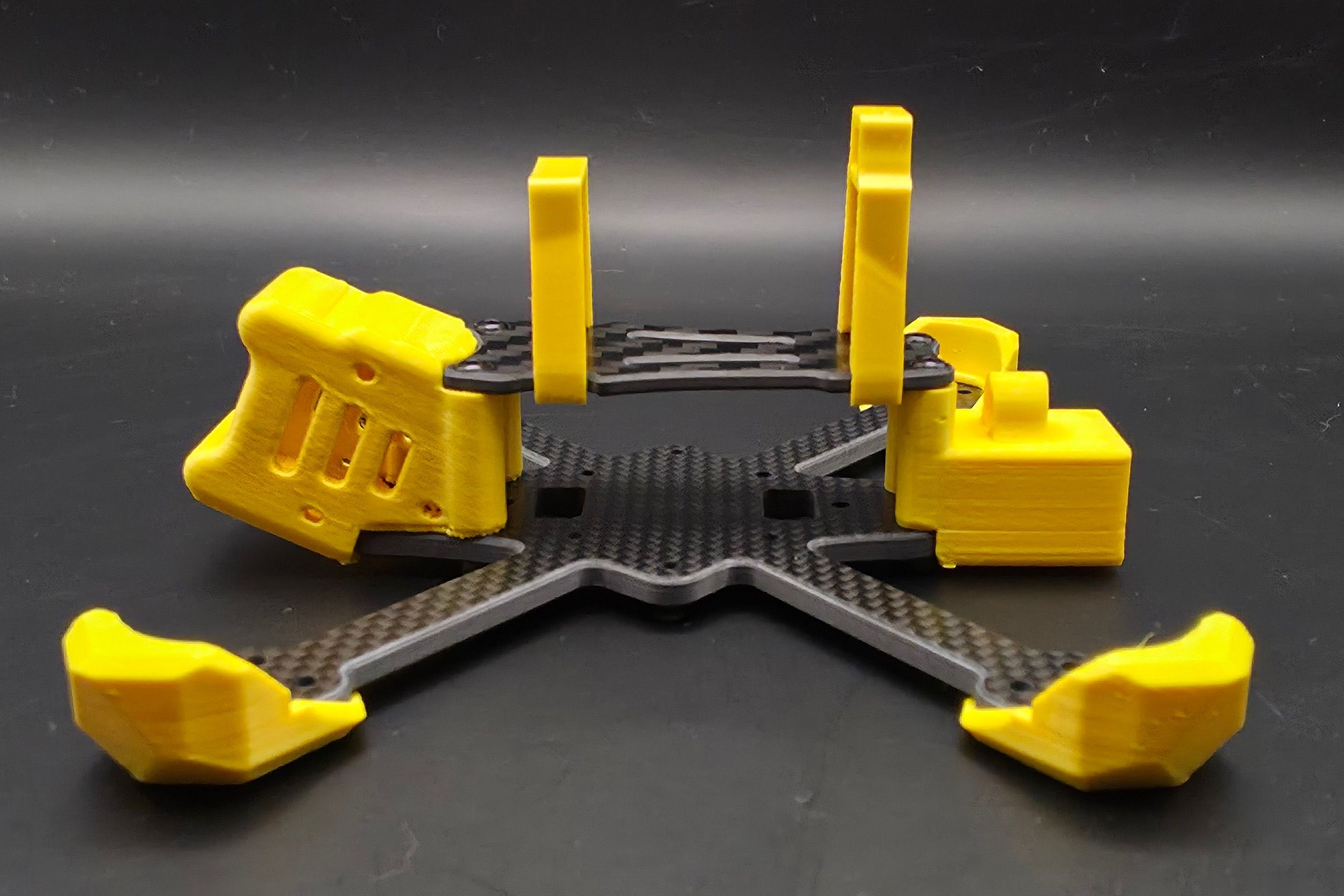
The box holds both plates and the full hardware kit — no battery strap and no TPU parts. The diagram is an illustration, not a drawing.
// 03 · Diff against the original
// 04 · Hardware check
20 × 20 · AIO 25.5 × 25.5
Both fit. But the USB port has to face down rather than sideways, or you cannot reach it once the quad is together. Add a capacitor too; a small 330 µF / 25 V is plenty.
O4 Lite · Avatar Nano V3 · analog
A DJI O4 Lite fits, wide lens included — practically anything that fits the space does. Run the DJI cable upwards: the camera cannot be flipped in software, so otherwise the picture comes out upside down.
2S ~560 mAh · 3S fits
The mount takes up to 63 mm in length. The 21 mm width suits a Dogcom 560; a wider pack is fine — in theory even a 3S goes in. A longer pack sticks out the back and shifts your CG.
// 05 · Datasheet
// 06 · Build list
A frame is just a frame — these are the three builds I run on it, lightest to strongest. None of it is sold here; the links go to Rotorama and HobbyDrone, two Czech shops, and for the Flywoo board straight to the maker. An item without a link is one you'll have to search for yourself for now. The radio is your call — just don't end up like UAVfutures, where the daily driver is whichever radio arrived in the mail this week.
the basic build
The simplest and lightest route. 1202.5 motors at 10,000–11,500 KV, or 1203/1204 at 8,000 KV — the KV number matters less than thrust: aim for at least 200 g per motor. Motors like that stay under 12 A, so a 12 A AIO board is enough. USB facing down, not sideways, and add a small capacitor.
for the O4 with the wide lens
More punch for the heavier camera. 1303 or 1304 motors around 8,000 KV — they suit 2S better and nothing needs limiting. The 11,500 KV version can pull up to 27 A on 2S, so you have to cap the throttle at about 70 % in Betaflight; I don't make it the main recommendation. The Flywoo GOKU 20A board is listed as 3–4S, but it runs on 2S — I have that confirmed by the maker, and it's what I fly myself.
the strongest build
For those who want still more. 1204 motors at 6,000 KV, the Flywoo GOKU 20A board and a 3S pack — the mount is made for the Dogcom 2S, but a wider pack is fine and the Dogcom 560 3S (62 mm) goes in.
The smallest linear antenna is fine for the VTX, and the smallest 40 mm one for the receiver. The VTX is your call — an O4 Lite or a WS Nano V3 both fit, stacked as two boards.
Worth it — specifically the MATEK Lost Model Beeper in the version without a battery; the one with a battery doesn't fit. I skipped it at first and relied on motor beeps — slightly tall grass and the quad is gone.
// 07 · TPU prints
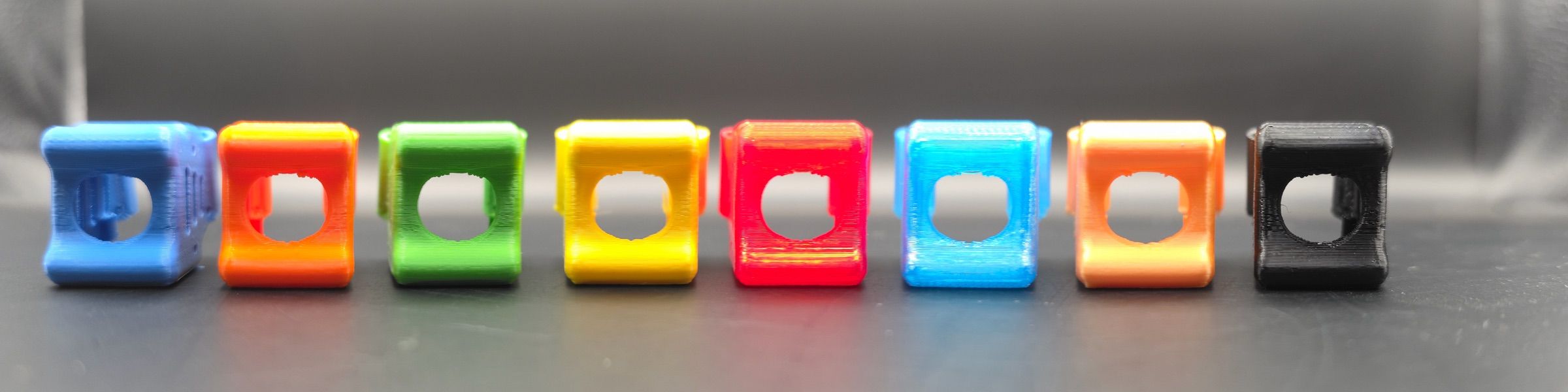
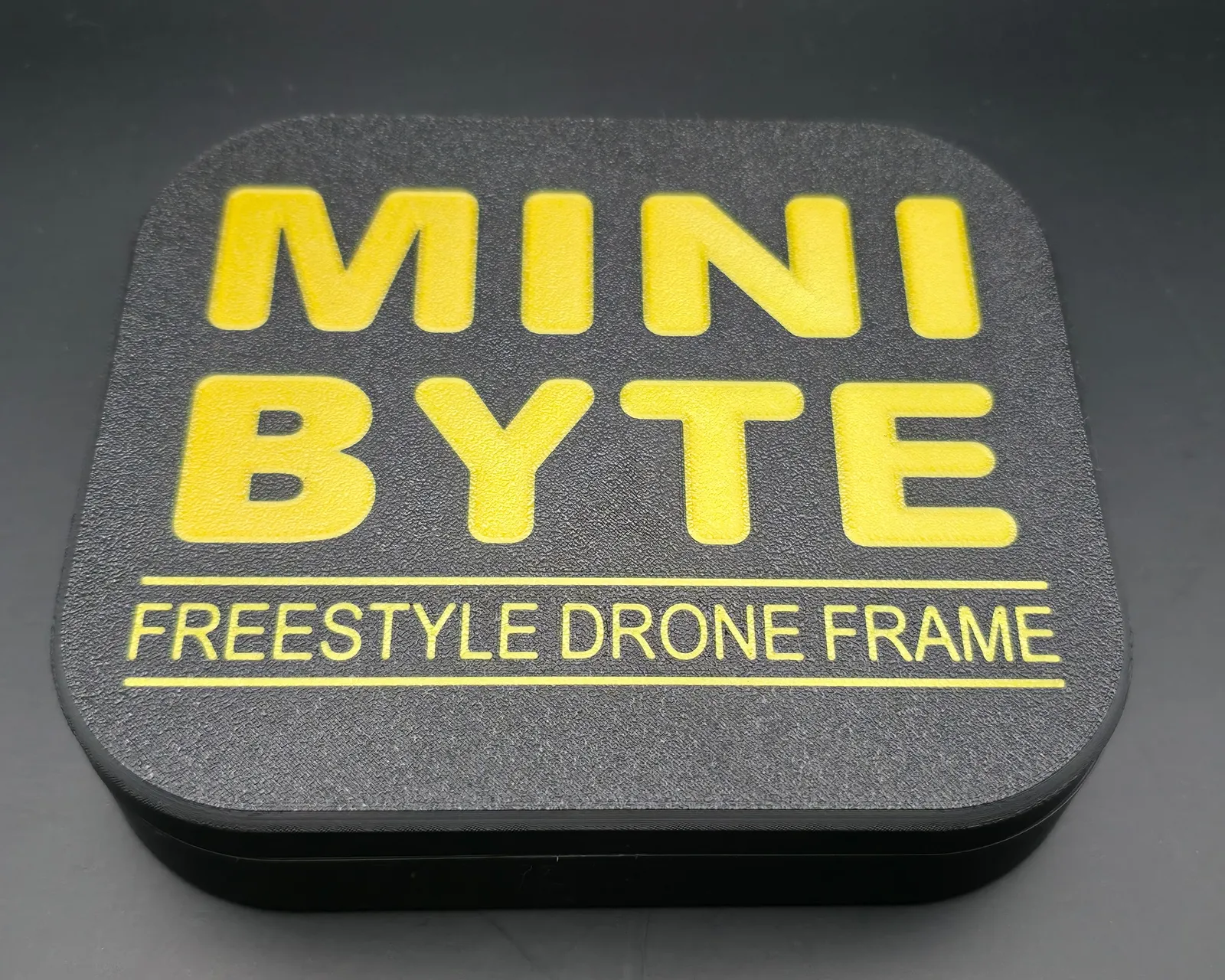
They aren't in the box, and that's deliberate — everyone runs a different pack, a different camera, and some want snap-on arm guards while others want screw-on. Every file is free on MakerWorld and Thingiverse, including a storage box (about 3 cm wide) that takes the assembled frame and fits in a backpack. And because the hole pattern matches, the community TPU collection for the Kayoumini on Printables fits too. If you don't have a printer, buy the TPU set or the box right here.
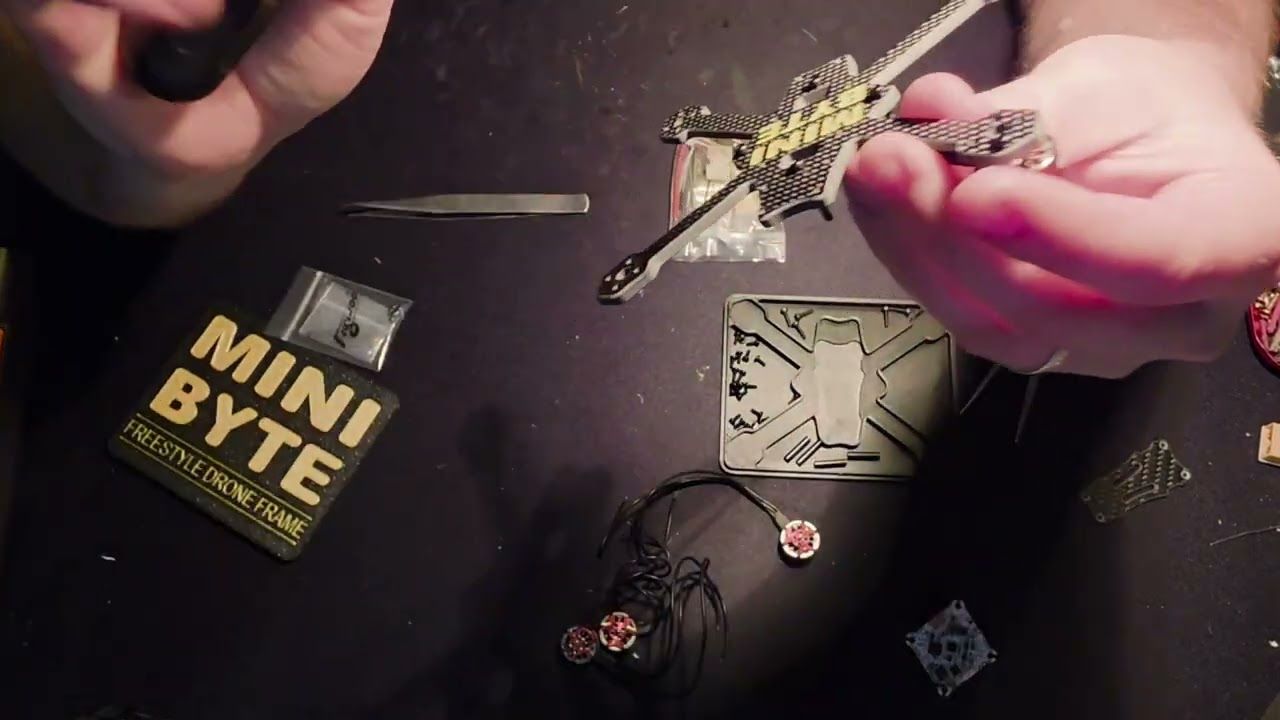
// 08 · Build tutorial
An hour and a half of building in real time — soldering, Betaflight, ELRS, camera setup. It isn't a sped-up highlight reel; you can build along with it. Czech audio.
Watch on YouTube ↗// 09 · Betaflight
The PIDs and filters I fly — separately for the 12A and 20A builds — plus the ESC setup in Bluejay. Not a universal recipe: other motors and props want other numbers, but as a starting point it saves you the first hour of tuning.
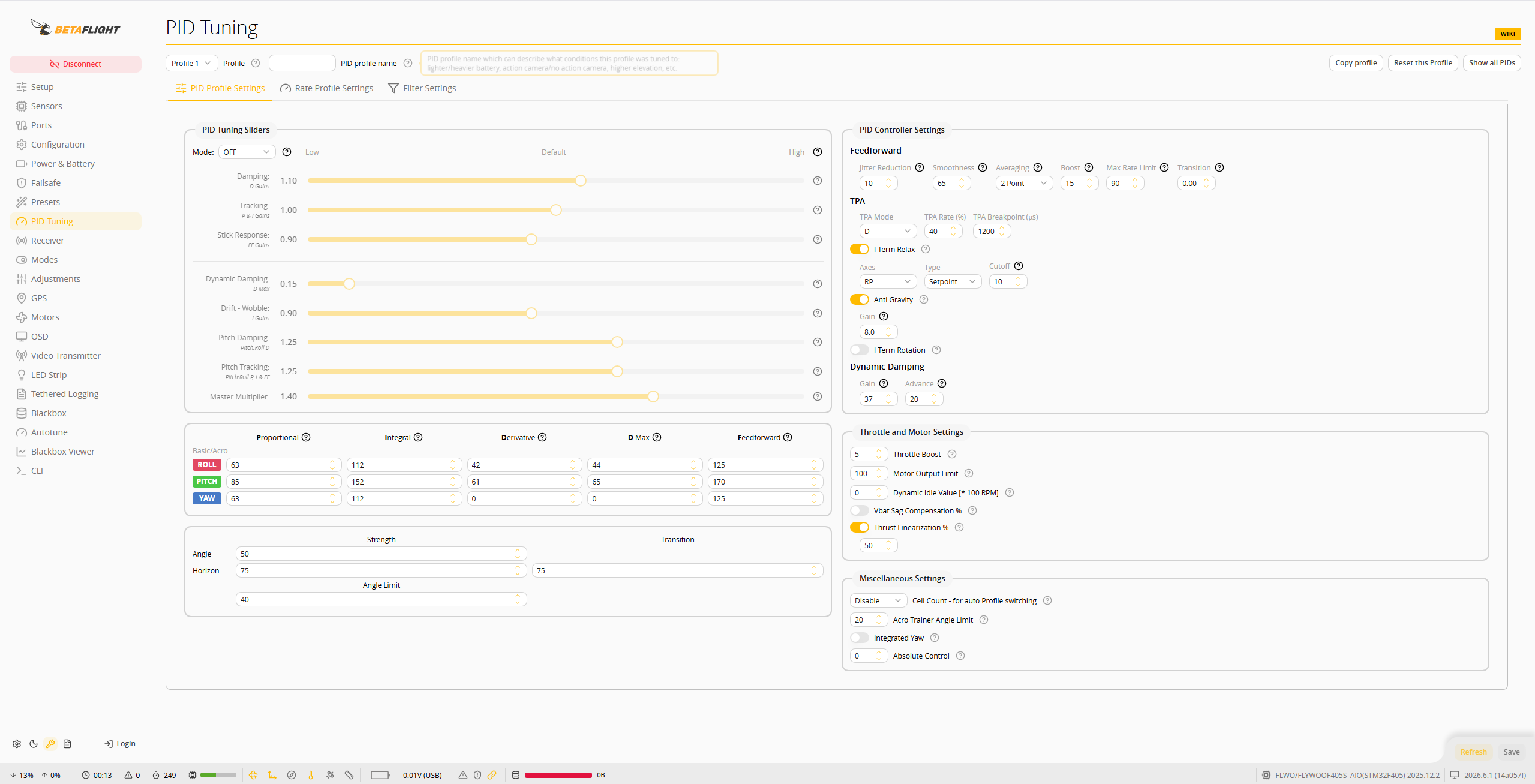
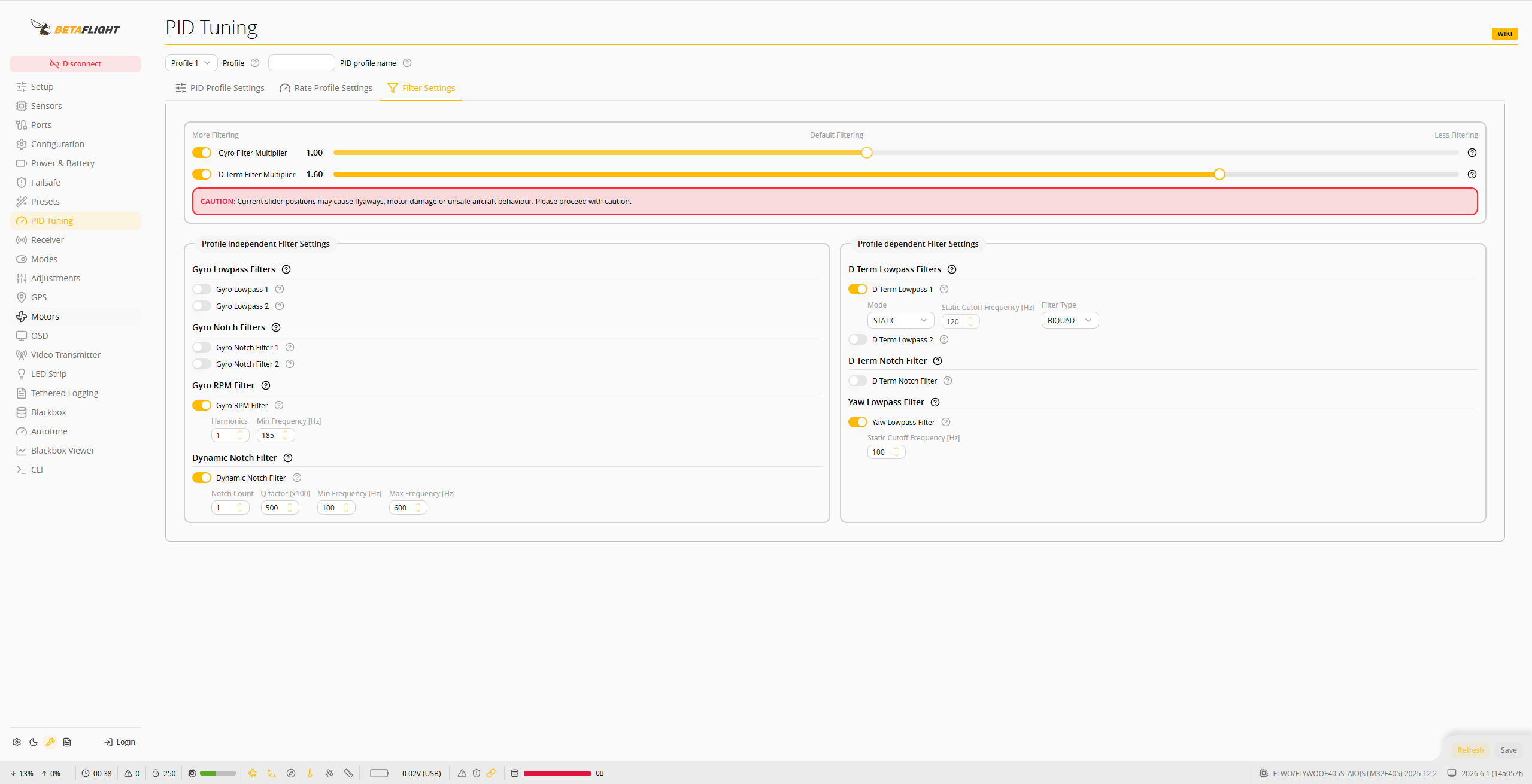
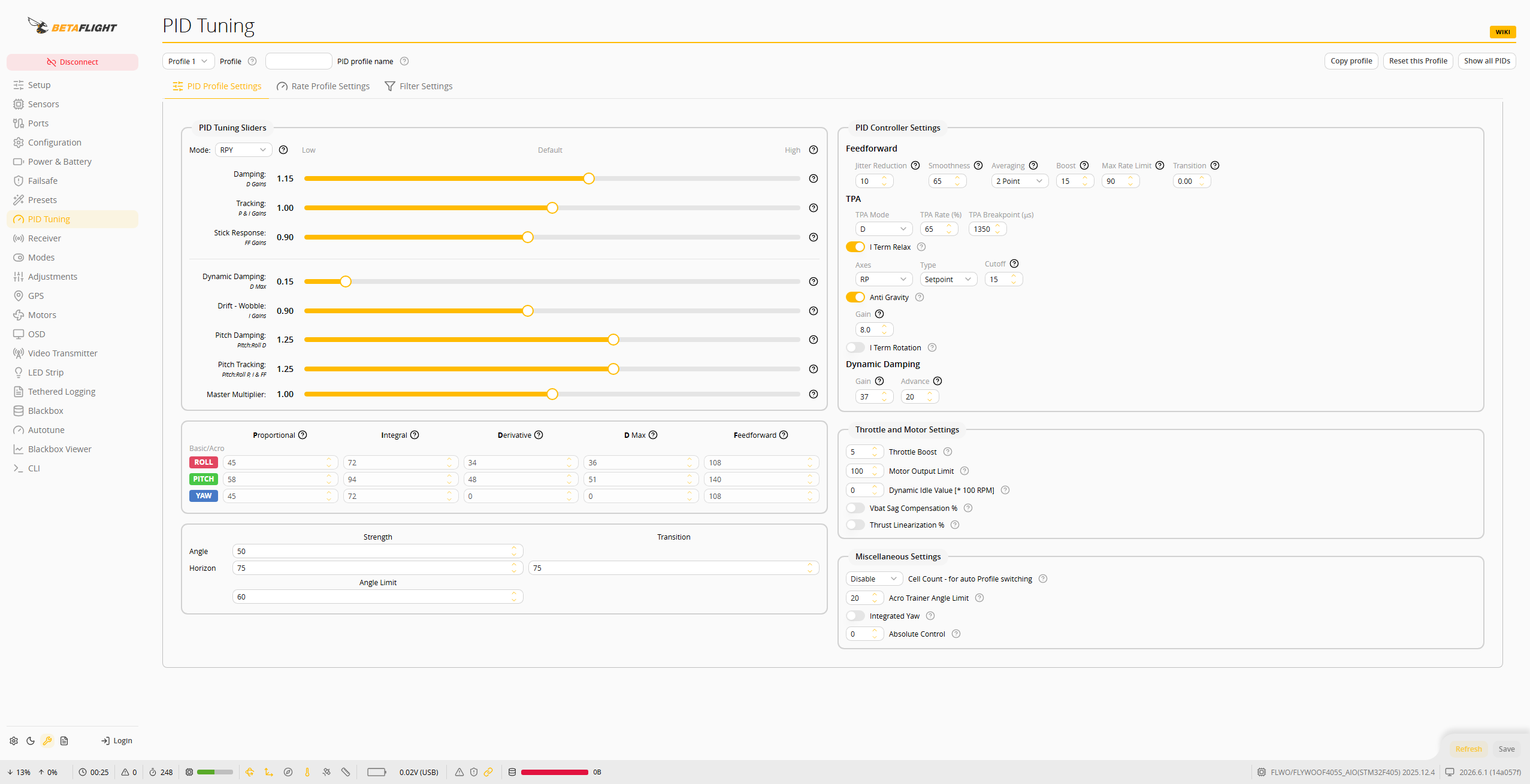
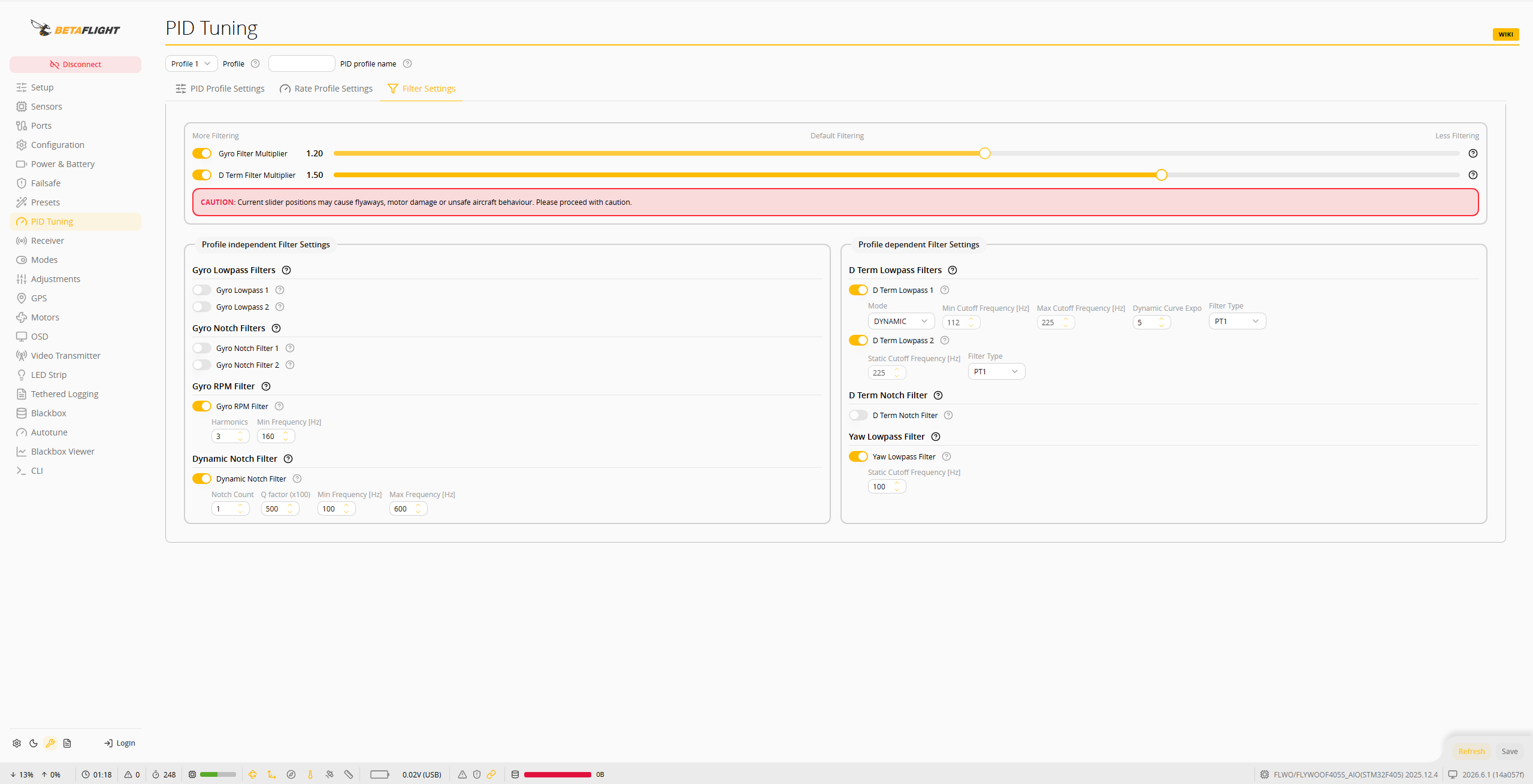
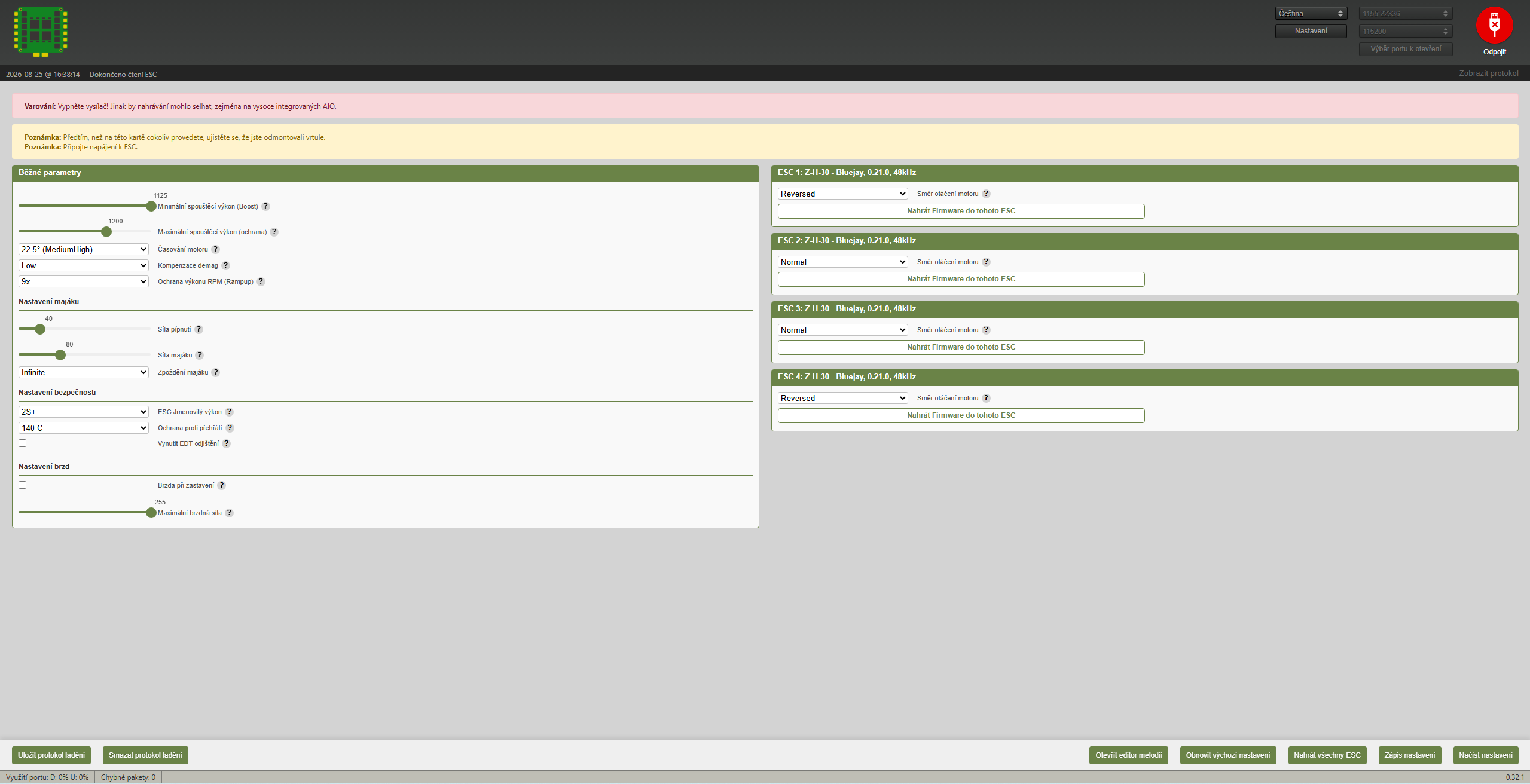
Screenshots from the Betaflight Configurator, exactly as I have it set. And as Joshua Bardwell says: you're going to learn something today.
Download as PDF ↓// 10 · Photos
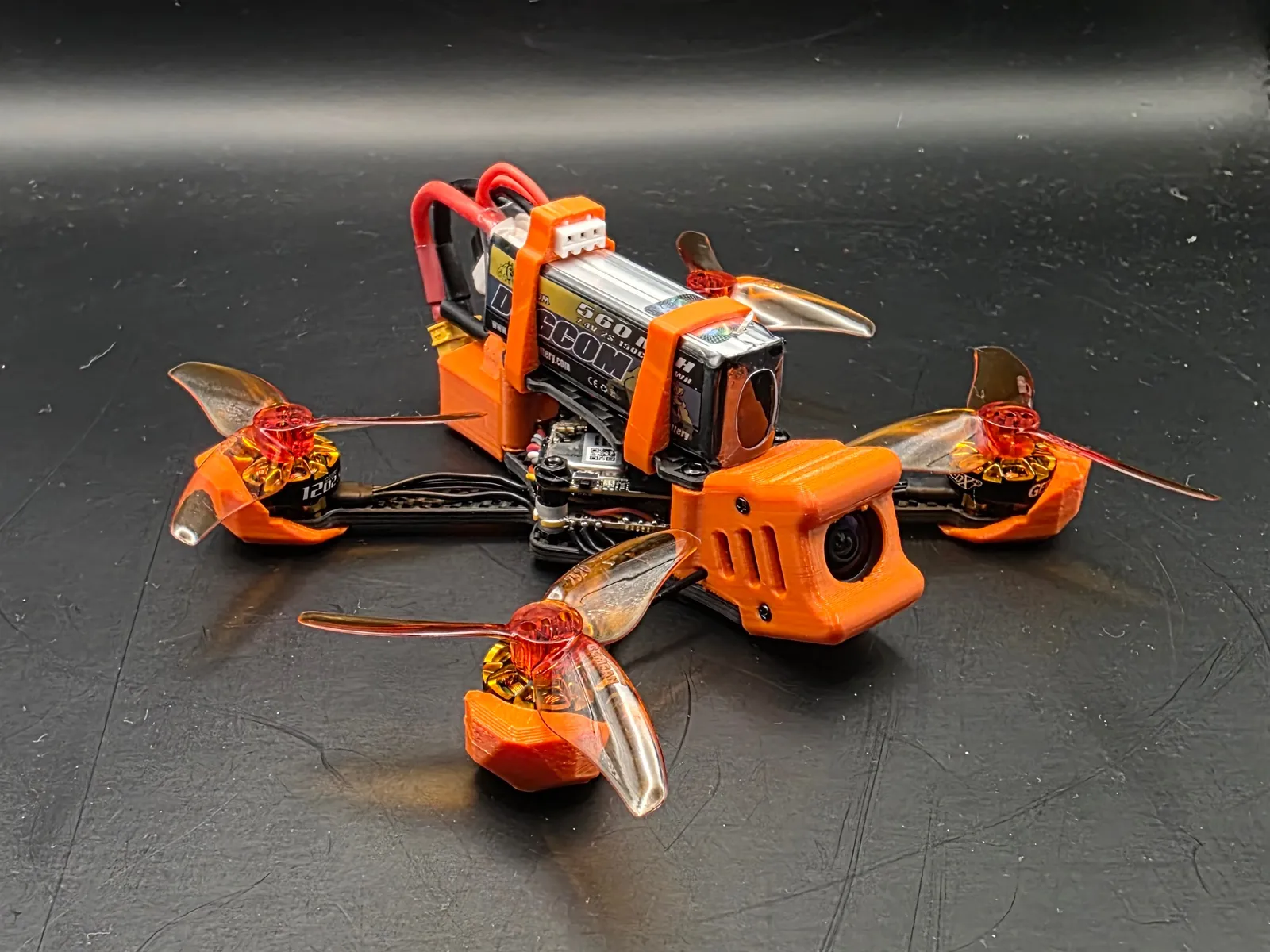
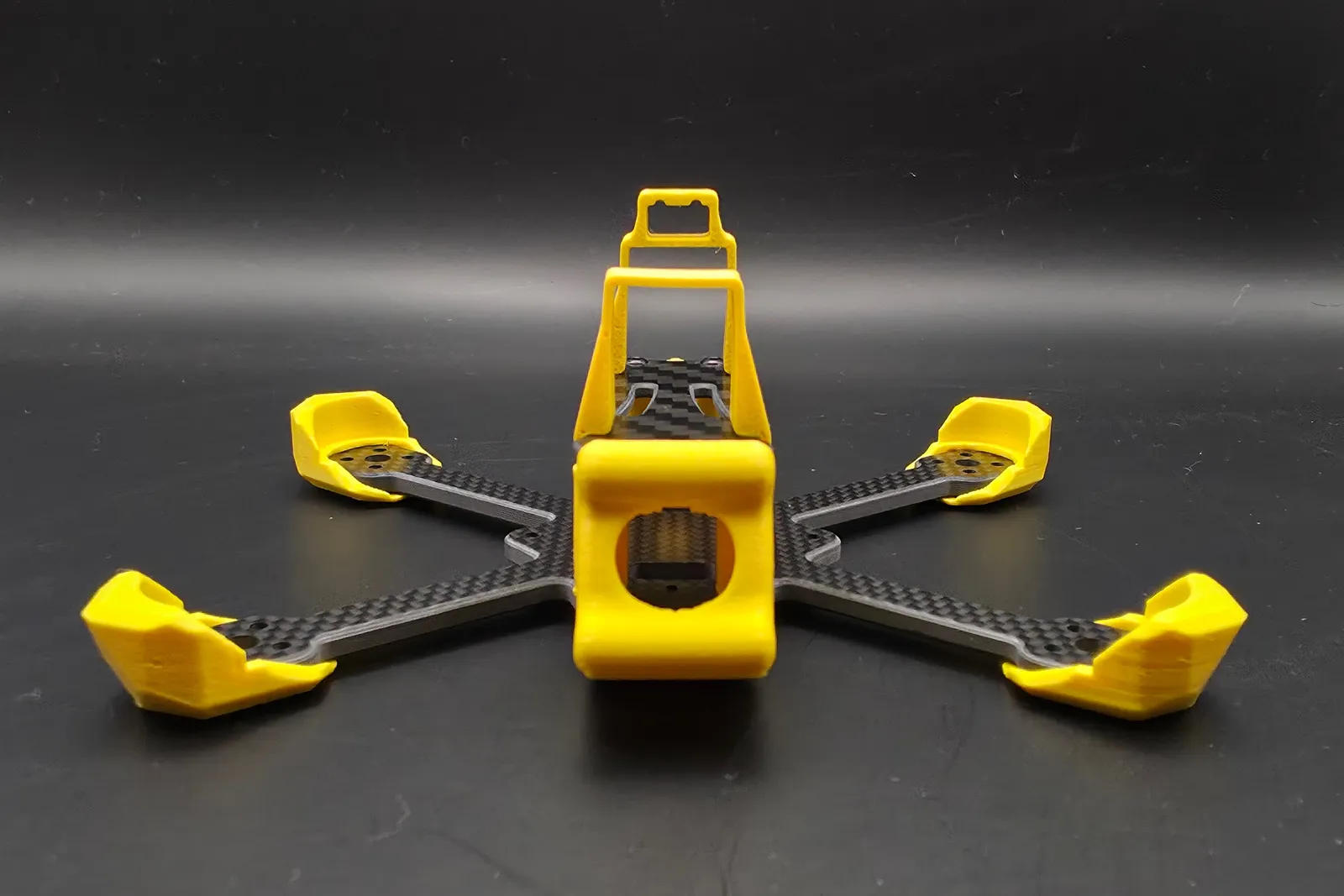
// 11 · Checkout
A 2.5" freestyle frame cut from T700 carbon. 3 mm bottom plate, 2 mm top, chamfered edges.
Five arm guards, a camera mount, a buzzer-and-antenna mount and two battery holders. The files are free on MakerWorld — this is for people without a printer, or who would rather not print them.
A printed case for the finished quad, so it travels safely in a backpack.